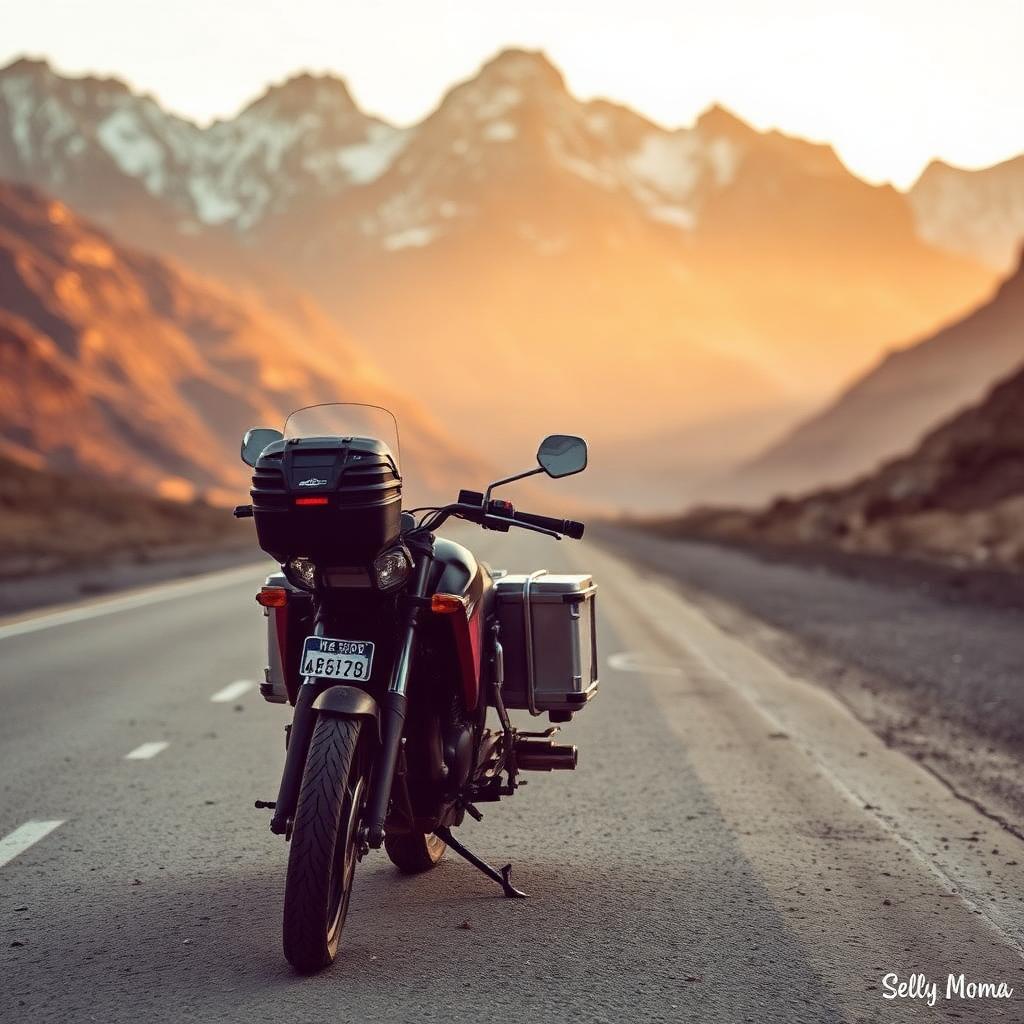
The honest account of riding the Leh-Ladakh Highway end to end — the altitude headaches, the rest days I didn't plan for, and the stretches that genuinely changed how I think about riding.
I'd been thinking about this ride for three years before I actually did it. Every motorcycling friend in India has an opinion on Leh-Ladakh — and almost none of them line up. Here's what mine looks like now that I've done it.
The route, day by day
Day 1 · Arrival in Leh
- · Arrive in Leh by afternoon, rest and acclimatise
- · Visit the local market and try some street food
- · Tour briefing by road captain
- · Getting introduced to the bikes
- · Visting Shanti Stupa

Reaching Leh from Bangalore is a journey that begins long before you arrive in Ladakh. We choose a connecting flight through Delhi, it is a gradual shift from Bengaluru’s familiar pace to the thin air, wide skies, and rugged landscapes of the Himalayas. The first two days are all about acclimatisation. Don't skip them. The rest of the ride is a mix of tarmac, gravel, and river crossings. Take it slow, take breaks, and enjoy the scenery.

The first day of riding is a gentle warm-up, with a loop around Leh and some light riding to get used to the altitude. The next few days are where the real adventure begins — crossing high passes, navigating gravel roads, and soaking in the stunning landscapes. Each day brings its own challenges and rewards, from the adrenaline rush of riding over Khardung La to the serene beauty of Pangong Lake.
Day 2 · Leh Ladakh Bike Tour
- · Visit Sangam
- · Visit the Magnetic Hill
- · Enjoy River rafting at World's Highest River rafting point
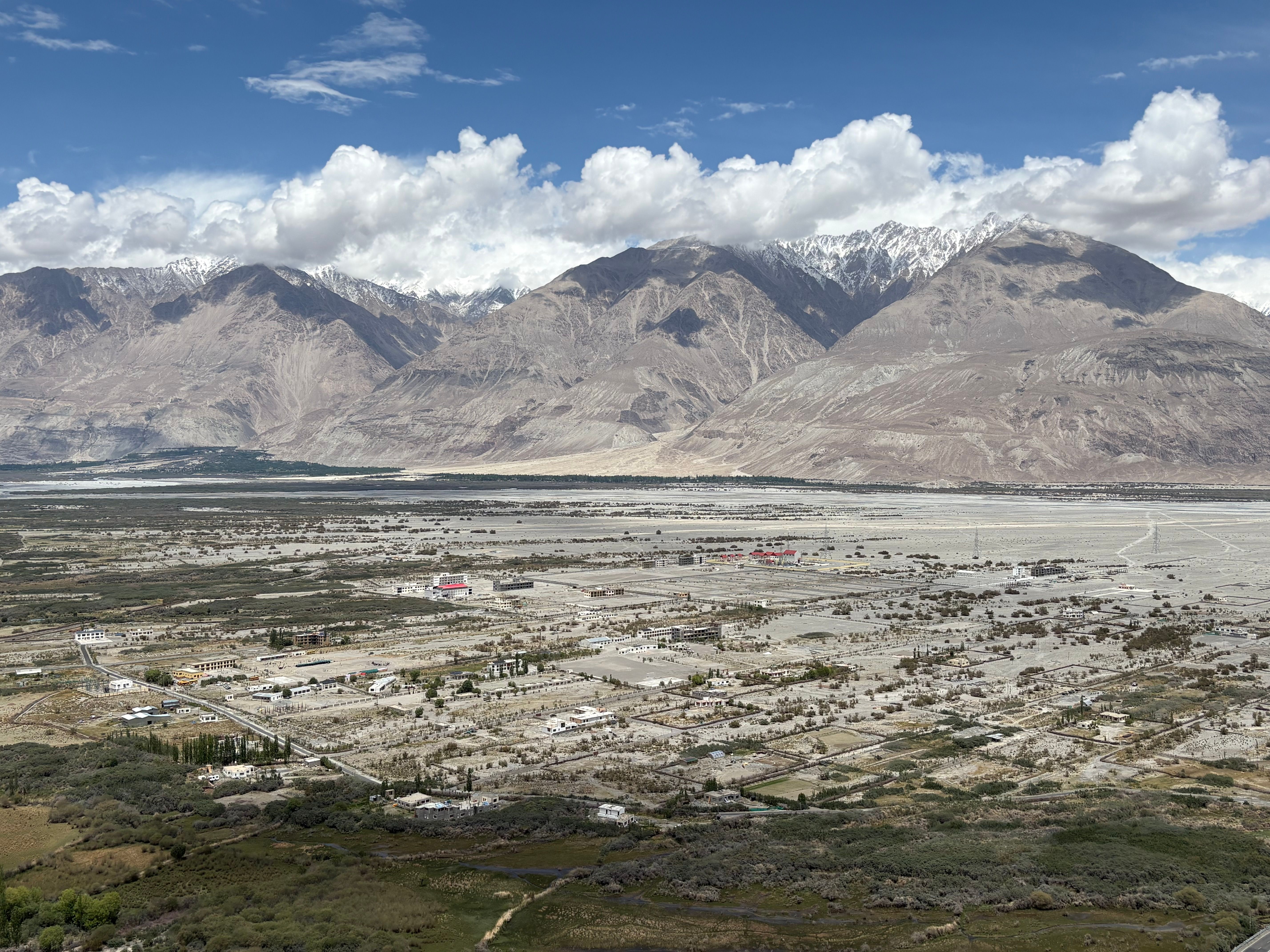
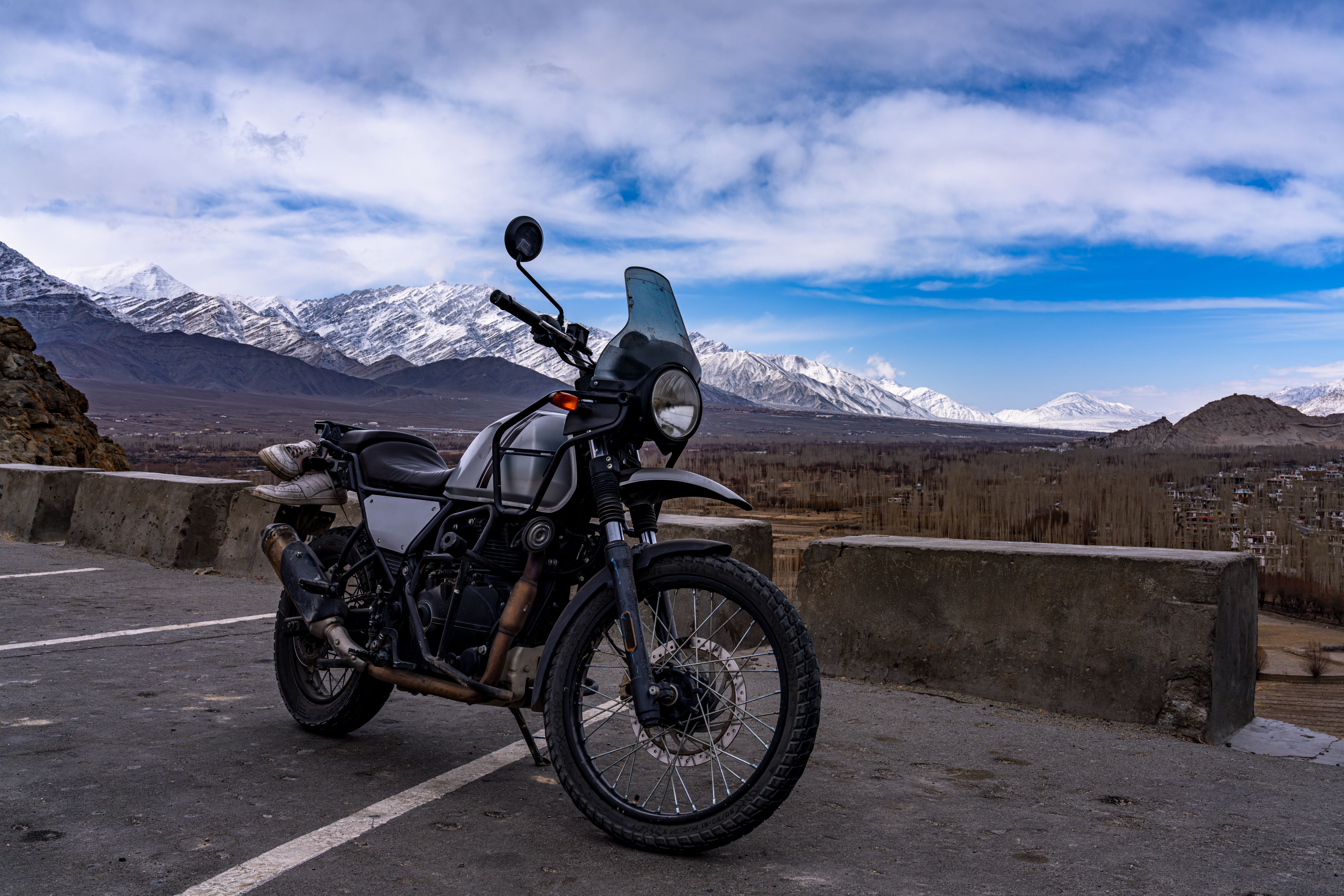
On Day 2, from Leh, we took a relaxed ride out to Sangam, the point where the Indus and Zanskar rivers meet. It is barely an hour away on the Leh–Srinagar highway, but the scenery changes quickly – the town fades, the road opens up, and suddenly you are looking down at two different rivers folding into one another. We parked the Himalayan 411 near the viewpoint and just stood there for a while, watching rafts drift in and the colours of the water shift in the afternoon light. It was an easy ride, but the kind of stop that quietly becomes one of the highlights of the trip
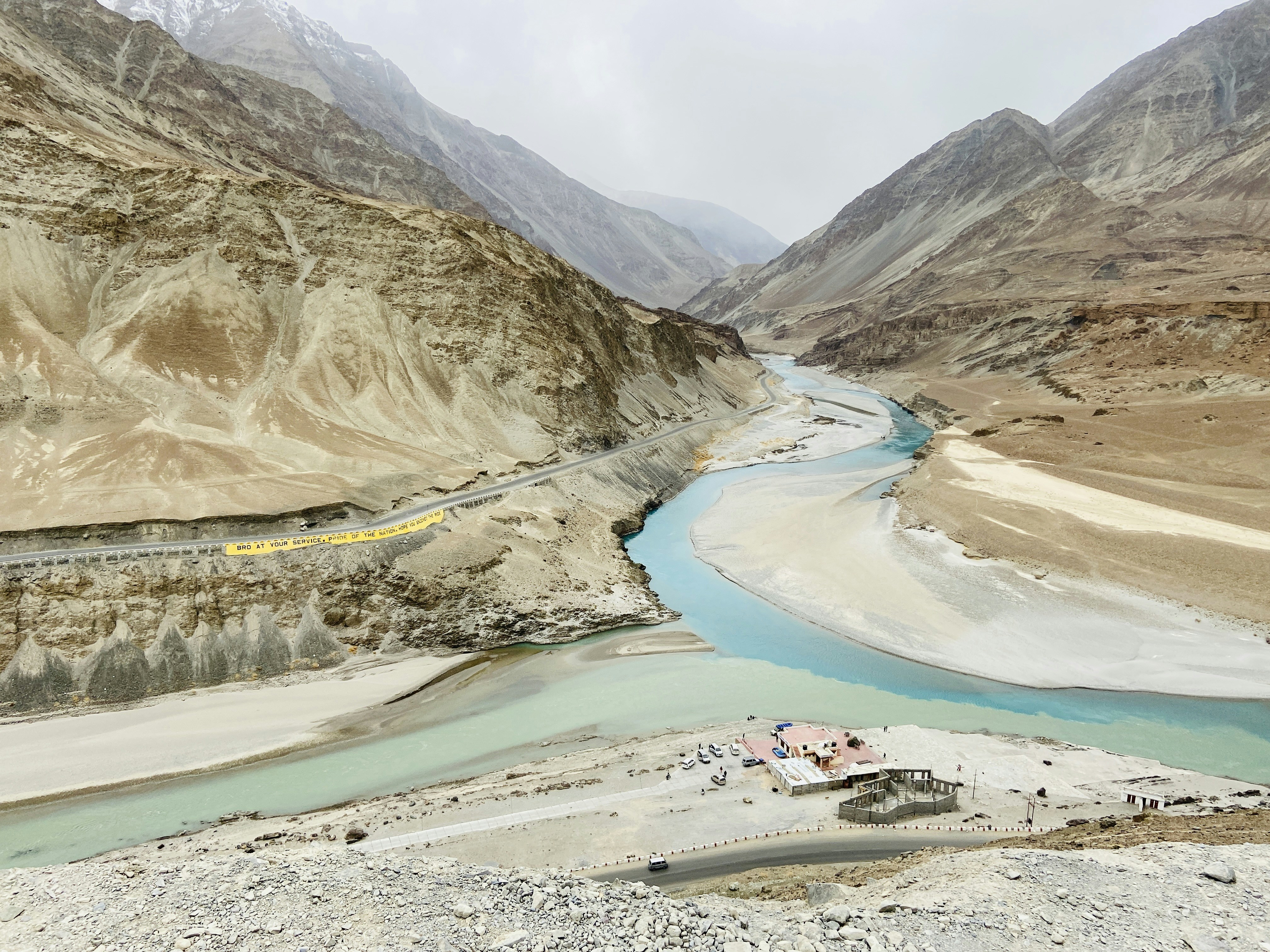
- · Stand at the viewpoint and clearly see the two rivers meeting, often in different shades (Zanskar muddier, Indus clearer, depending on season).
- · The confluence of the Indus and Zanskar rivers is a serene spot to pause and take in the landscape.
- · Try river rafting (Zanskar side, usually Chilling–Sangam route), which takes a few hours and is popular in summer..

Day 3 · LEH → Nubra Valley
- · Khardung La (5,359 m) — highest motorable pass in the world
- · Don't be a hero. Take it slow, take breaks, and don't forget to breathe.
- · Experience the ride on the highest motorable road in the world.
- · Visit the white sand dunes in Hunder
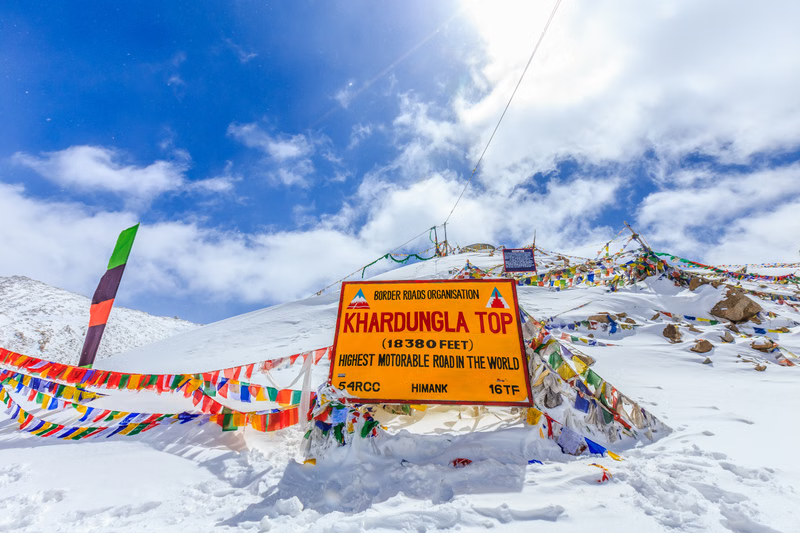
Day 3 was our move from Leh into Nubra Valley, with the Himalayan 411 loaded up and pointed towards Khardung La. The climb began almost immediately after leaving town, the tarmac snaking above the familiar Leh skyline and slowly trading buildings for bare rock and snow‑streaked ridges. Khardung La itself was cold, windy, and unforgettable – we stopped just long enough for a cup of tea, a few photos, and that quiet moment of realizing we’d ridden our way to one of the world’s highest passes. From there the road dropped sharply towards the Shyok river, the colours softening from harsh browns and whites to greener slopes, villages, and finally the wide open stretches near Hunder. By the time we reached our stay close to the famous sand dunes, it felt less like we had changed hotels and more like we had crossed into a different Ladakh altogether.
Day 4 · Nubra Valley → Pangong via Shyok
- · Drive to Pangong Lake passing through the Indo-China border
- · Rides via Shayok river route
- · Dinner and overnight stay at camps. At midnight enjoy the Galaxy views from your camp
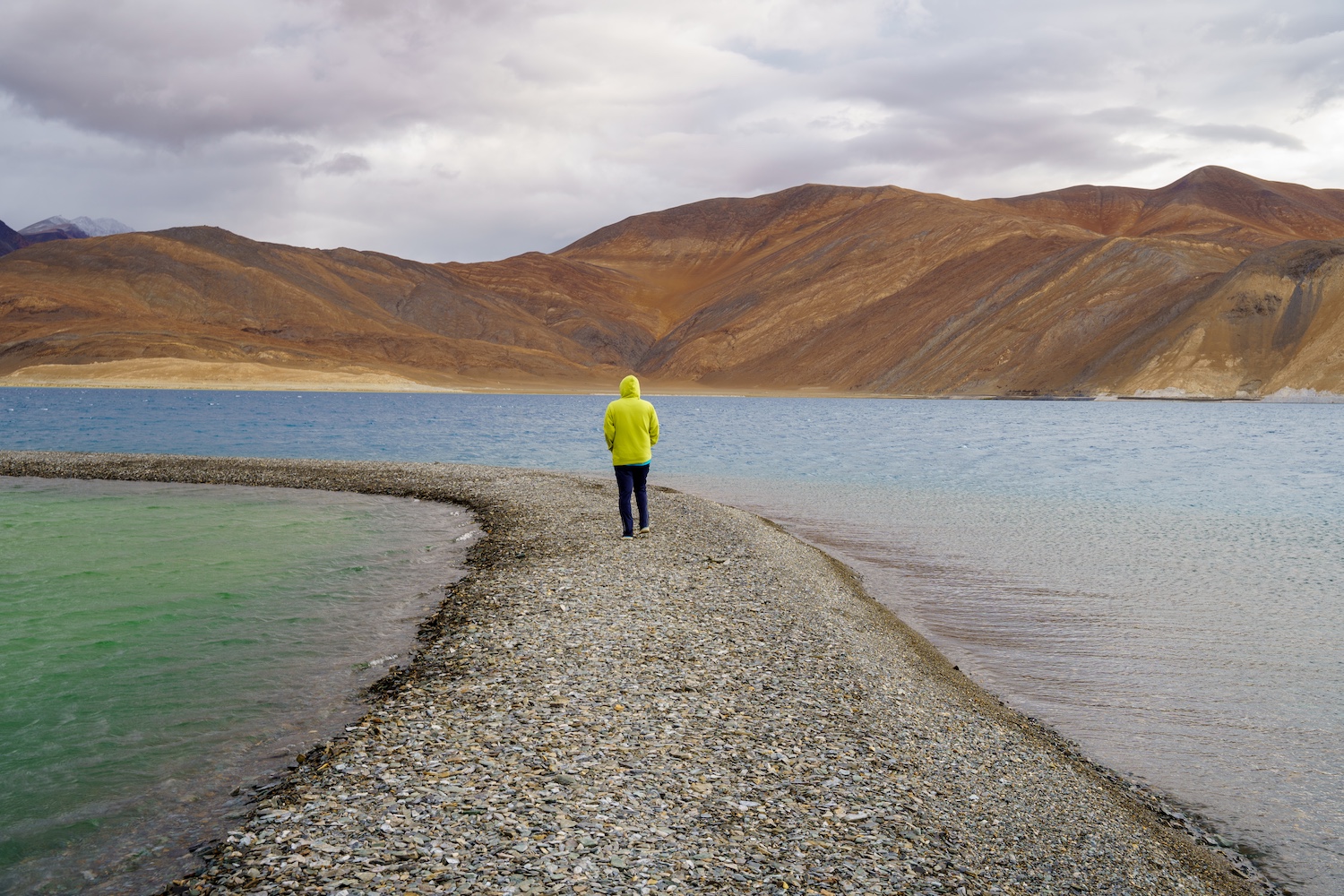
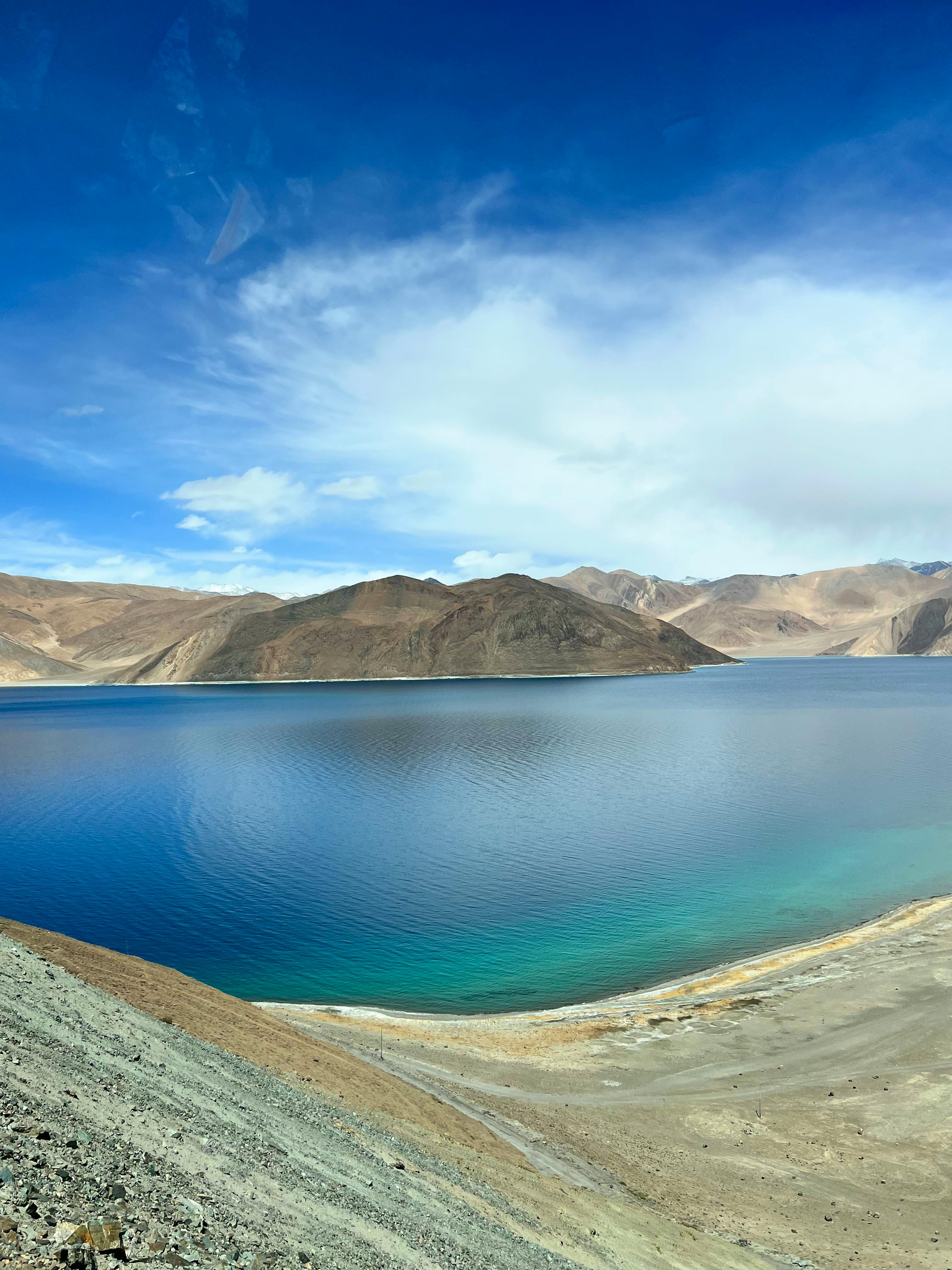
On Day 4, we rolled out of Hunder, leaving Nubra Valley behind and riding towards Pangong via the Shyok route instead of looping back to Leh. We started from Hunder soon after breakfast, fuelled up both the Himalayan 411 and ourselves, and followed the road back to Khalsar before turning off towards Agham. From there the character of the ride changed completely: long, lonely stretches along the Shyok river, sections of smooth tarmac broken by rough gravel, and the occasional water crossing that reminded us we were still in real Himalayan country. Villages grew smaller and farther apart as we rode on towards Durbuk and Tangtse, and then, without much warning, the landscape opened up to that first surreal glimpse of Pangong’s blue. It had been a demanding day in the saddle, but rolling into Pangong by evening, with the lake glowing under the high‑altitude light, felt like the perfect reward

Day 5 · Hanle → Umingla → Hanle
- · Visit Umling-La, the world's highest motorable road
- · Climb Umingla and soak in the summit views before descending back to Hanle
- · The last village of India-China Border
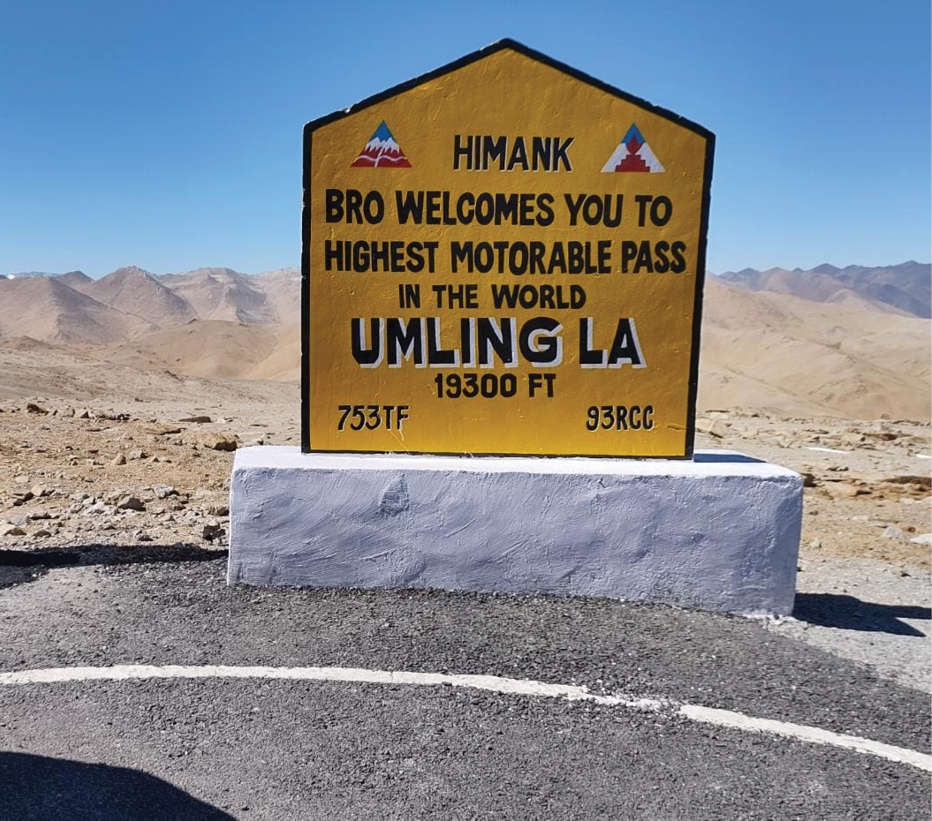
(Day 5 & 6): Our next stretch out of Hanle was the most extreme day of the entire trip – a loop to Umling La and back. We left before sunrise, the Himalayan 411’s headlight cutting through the cold, empty roads of Changthang as the sky slowly turned from black to blue. The tarmac soon gave way to rougher tracks, patches of sand, and long, rolling plains where it felt like we were riding on the roof of the world with almost no one else around. The final climb to Umling La was slow and deliberate, every throttle input careful in the thin air, until the road finally spat us out at a signboard announcing the world’s highest motorable pass. We didn’t linger too long at the top – just enough for a few photos, a quiet congratulations to each other, and a moment to let the altitude sink in – before turning back towards Hanle, chasing the same lonely roads home as the light faded.
Day 7 · Hanle → Leh
- · Tso Kar is a salt lake at 4,580 m. Stunning in the morning light.
- · The road is gravel and can be rough. Take it slow.
- · Return to Leh by evening, rest and enjoy the town.
Our final day on the road was the long ride back from Hanle to Leh, a quiet reset after the raw high of Umling La. We left Hanle with the first light, following the narrow road out past Loma and Nyoma, where the landscape slowly softened from stark Changthang plains to the more familiar curves of the Indus valley. The Himalayan 411 settled into an easy cruise on the smoother stretches, broken up only by tea stops at small dhabas near Chumathang and the occasional pause to just stand and take in the silence. By the time we crossed Upshi and rolled past Karu towards Leh, the chaos of the first day in town felt very far away; we were returning to the same place, but with completely different eyes. Parking the bike in Leh that evening, dusty and tired, it felt less like the end of a trip and more like we had just finished reading a book we’d wanted to live inside for years.
Day 8 · At Leh
- · Rest and recuperate in Leh
- · Explore the town and its attractions
- · Prepare for the journey back
The loop was complete: Nubra, Pangong, Hanle, Umling La, and finally back to Leh – not just lines on a map, but a ride that stitched together some of the wildest corners of Ladakh. Yes, we were tired, exhausted, and a little worse for wear by the end of it. But we were also richer for the experience – the kind of ride that changes how you think about what’s possible on two wheels, and leaves you with stories that will last a lifetime. It was a great achievement for all of us.
Day 9 · Return to Bangalore
- · Leh to Delhi
- · Explore Delhi and return to Bangalore
- · Carry lot of memories
"If this Ladakh circuit sparks even a small urge to ride north, save this itinerary, tweak it to your pace, and go meet these roads yourself. No blog, including this one, can fully explain how it feels when the wind, the silence, and the altitude all hit you at once on a Ladakh pass – that part you’ll have to discover on your own."
What surprised me
Going into this trip, I thought I had a fair idea of what Ladakh would be like – high passes, difficult roads, and a few “bucket list” names to tick off. What I didn’t expect was how different the region feels once you’re actually there on a motorcycle, living out of a couple of bags and watching the landscape change one bend at a time. These are a few things that genuinely surprised me along the way.
- · The silence between places: There are long stretches where it’s just the bike, the wind, and the sound of your own breath in the helmet, and that kind of silence is rare if you’re used to city life
- · How quickly altitude reminds you who’s in charge: You learn fast that Ladakh is not a place to show off; it’s a place to respect your limits, drink water, and take it slow.
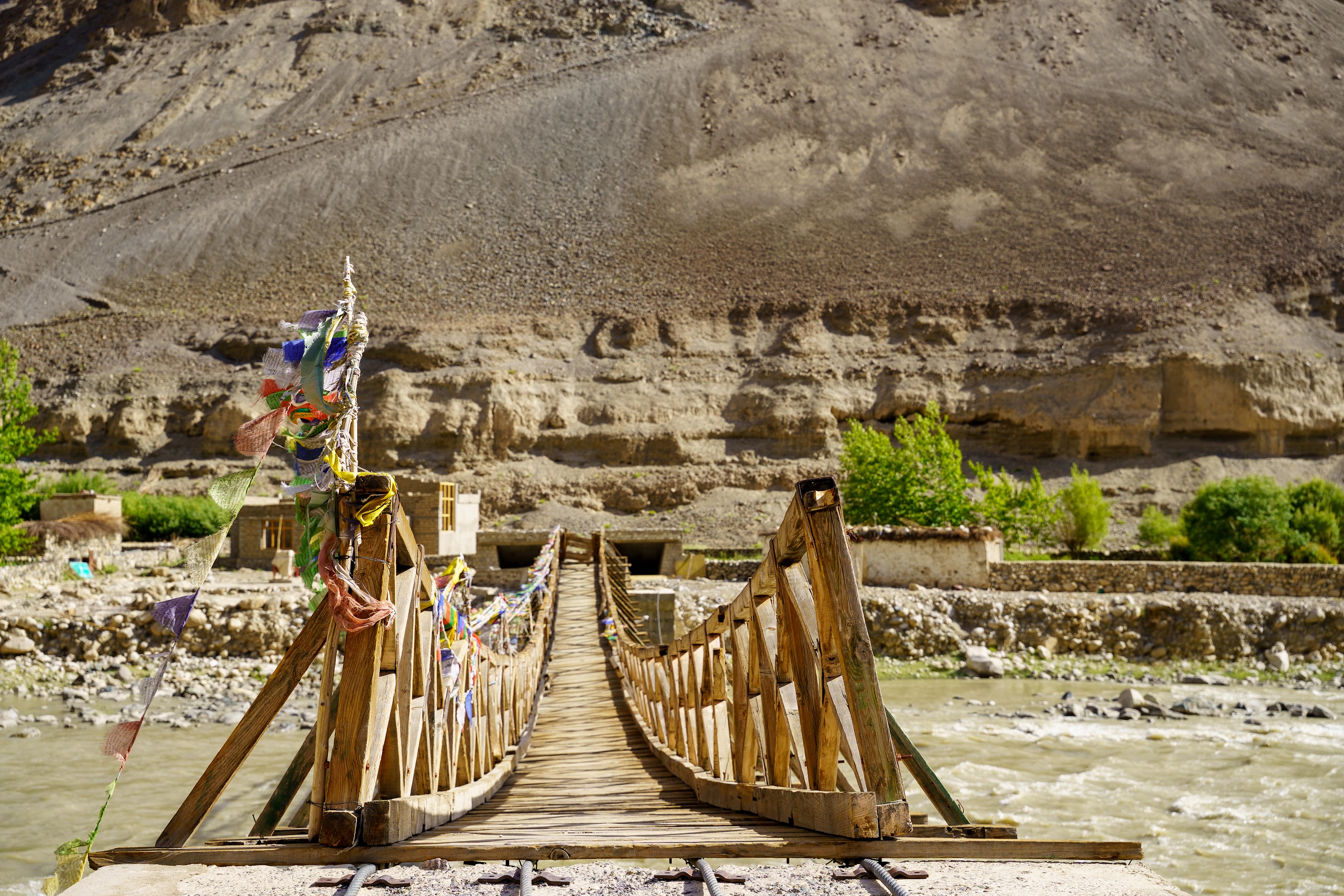
- · Roads that switch moods in minutes: On some days, the road was smoother than I expected – perfect blacktop, sweeping curves, and the kind of surface that makes you forget how far from home you are. Then, within a few kilometres, it would change to loose gravel, broken patches, or a surprise water crossing that demanded your full attention.
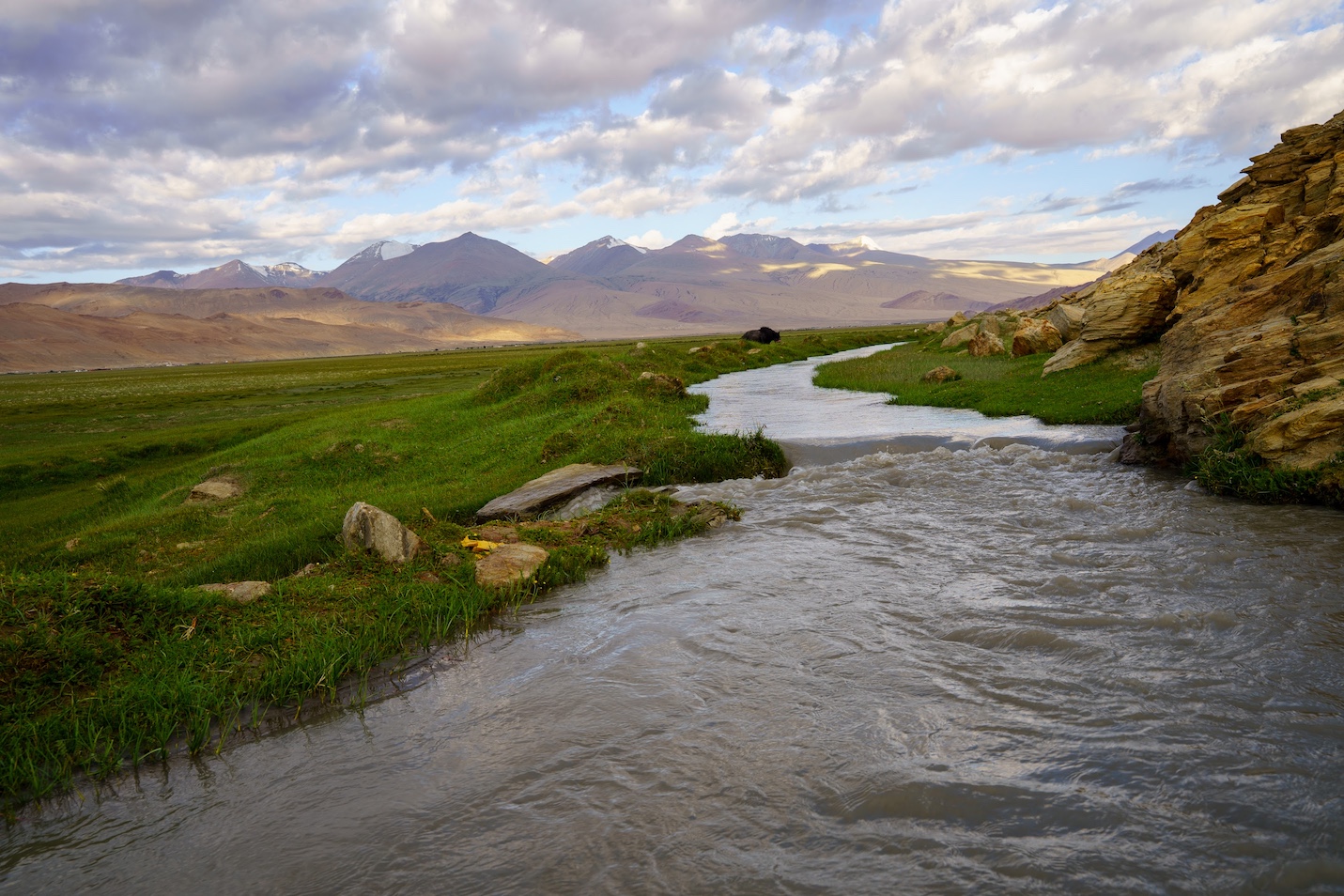
If you’re planning your own Ladakh ride, keep some space in your itinerary – and in your head – for these small surprises. The big passes and famous lakes will impress you, but it’s these quieter details that will stay with you long after the dust has washed off your riding gear.